BLOGBuilding with agents
Agency OS: why I built my own Grok Bot alternative
An agency OS puts your AI agents, client data and way of working in one system you own. Why Grok Bot wasn't enough, and how I built my own.
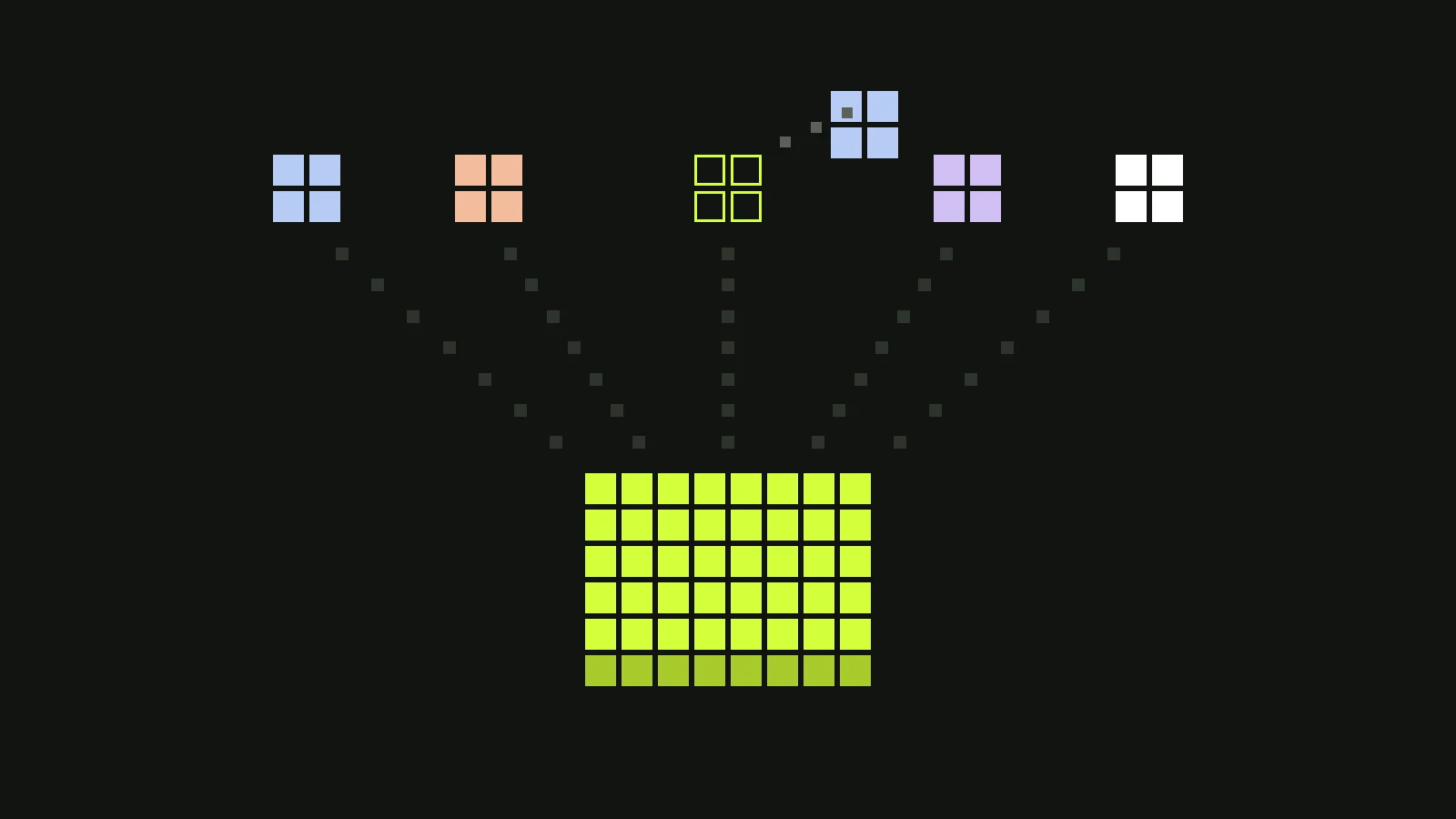
An agency OS is one system where your AI agents, your agency’s data and your way of working live together, on infrastructure you control. I’ve built one for Ansell AI, and I’m moving my bots onto it now. It does what Grok Bot does, a team of always-on bots with computers they can use, but it runs where I choose, each bot uses the model I choose, and it works from my own records and memory.
This week I took a room of agency owners through Grok Bot. Some use it every day, some had never opened it. The questions afterwards weren’t about setting it up. They were about data, safety and cost, and whether they could build something like it themselves. I’ve answered every one of them at the end. This post is the longer answer to the biggest: why I built my own.
What Grok Bot got right
I’ll start with the good bit, because there’s a lot of it.
Grok Bot launched on 11 August 2026. It’s made by SpaceXSI, the company formed from xAI, and its bots run on the cloud of Cursor, which SpaceX bought in August. By September it was getting nearly 50,000 Google searches a month in the UK alone. You download an app, create a bot, give it a name, a job title and a one-line description, and it gets to work.
Your bots share a computer in the cloud, each with its own screen, and a browser, files and a terminal. You log in to a site once and the bot stays logged in. Routines run on a schedule, or when something happens: a Slack message, a GitHub event, a form being filled in. The bots read each other’s job descriptions and hand work to whichever one fits. It all syncs to your phone, so you can run your team from the back of a taxi.
It works out of the box. That’s the achievement. Agents with their own computers, routines and memory existed before, but you needed a developer to set them up. Grok Bot made it something anyone could try in ten minutes.
Grok Bot made always-on agents something anyone could try in ten minutes.
For a lot of people, that’s all they’ll ever need. I’d tell anyone to try it.
The “must-have” agent changes every few months
Here’s the thing that made me cautious. Grok Bot isn’t the first agent everyone was talking about this year. It’s the third.
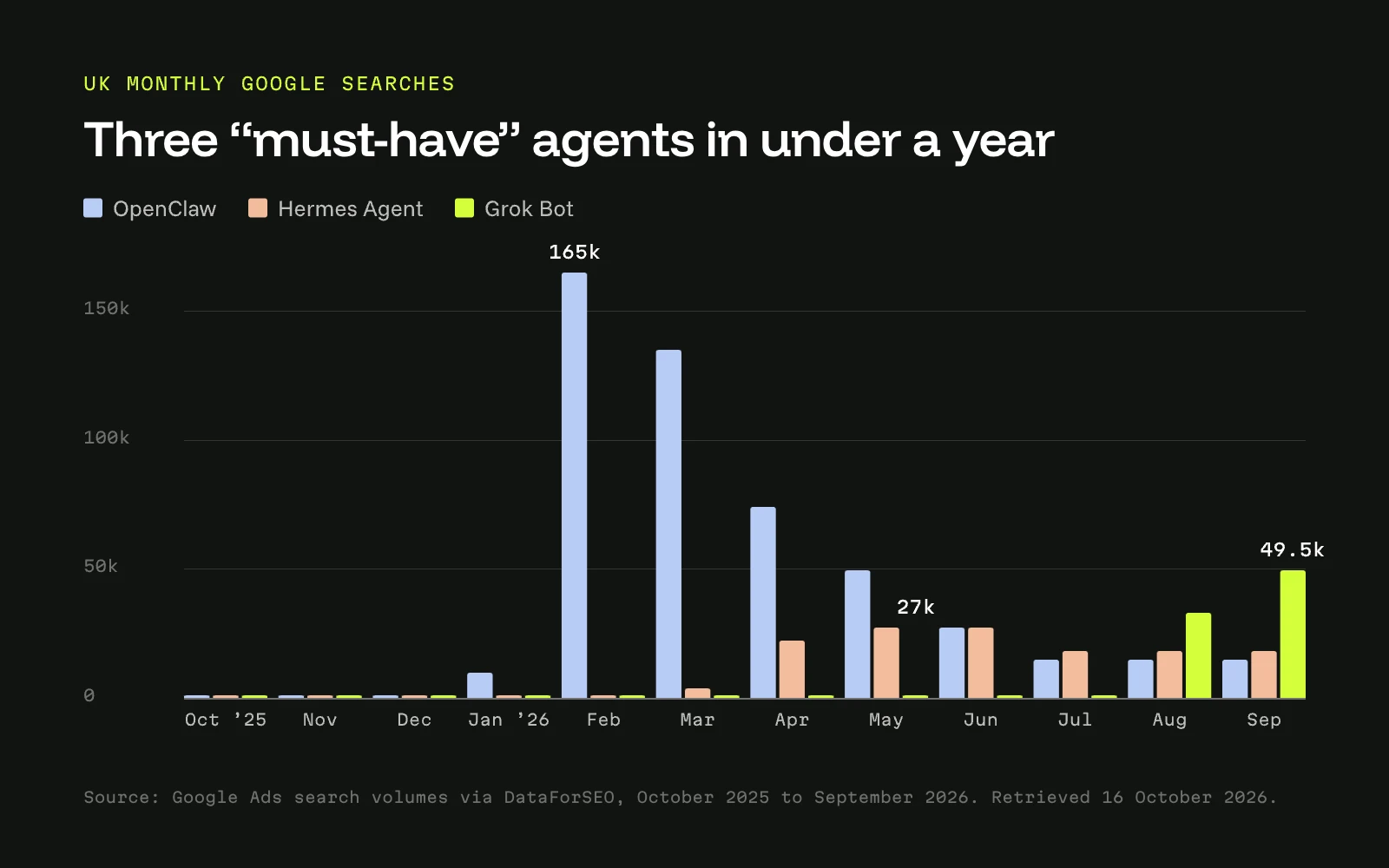
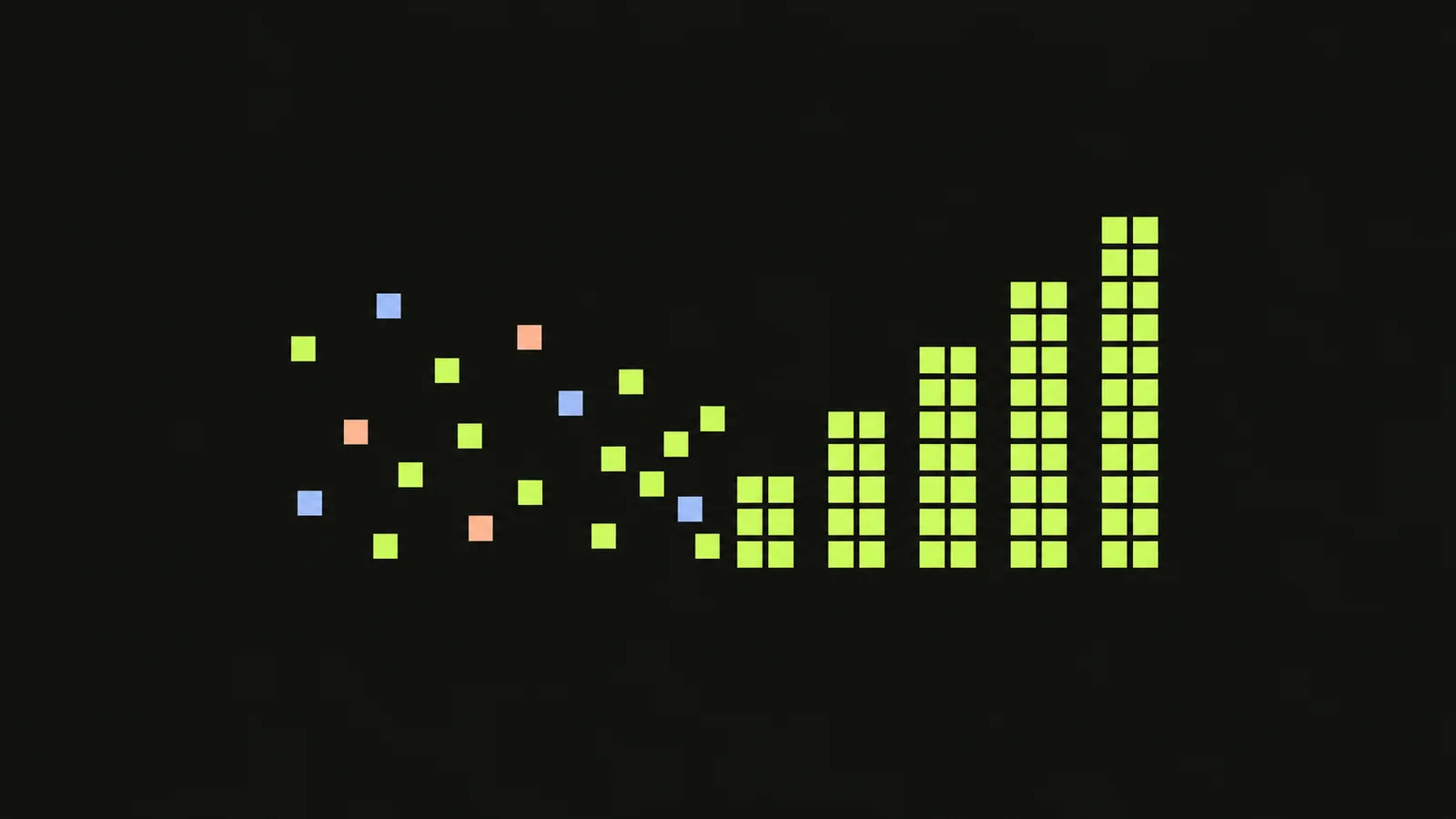
In February, OpenClaw was the one. UK searches hit 165,000 a month, then fell by 91%. By the spring it was Hermes Agent. Now it’s Grok Bot. ChatGPT Dots, Instinct and Meta Muse have all arrived since the summer too.
None of that is a criticism of any of them. It’s how fast this moves. But if you rebuild your agency around this season’s favourite, you’ll be rebuilding it again by spring.
Where Grok Bot stops for an agency
Running an agency isn’t the same as running your own diary. Six things got in the way.
1. Your clients’ data on a US cloud
Grok Bot’s computers run in the United States, and its security FAQ says there’s no option to run it on your own premises. For your own admin, that’s fine. For client work, it’s a data protection question. If a bot reads a client’s customer list, their staff emails or their sales data, that’s personal data leaving the UK, handled by a US processor. Under UK GDPR you’re responsible for that transfer, for having the right agreement in place, and for checking your client’s contract allows it. Plenty don’t.
The bots also share everything. In SpaceXSI’s own words, all your bots share one cloud computer, and “files, browser sessions, and command line credentials on that computer are available across your Bot roster.” That’s fine for a personal assistant. When one account manager’s bots work across several clients, it isn’t how I’d hold client access.
Running your own system doesn’t make data protection go away. If a bot sends client data to Claude, GPT or Gemini, that provider still processes it and you still need to assess it. The difference is that the choices are yours: which provider, which region, which jobs go to a model running on your own machine, and which data never leaves the building.
2. You don’t choose the model
Grok Bot has no model picker. Its security documentation says Cursor manages model selection and the serving mix “can change over time with no fixed vendor set guaranteed”. Enterprise customers can set a list of allowed models, and even that comes with a note that enforcement isn’t guaranteed. When a better model ships, and one ships every few weeks, you can’t point a job at it. Some jobs suit one model and some suit another. Writing in my voice, reviewing code and sorting a big pile of email are different jobs, and I want to pick the model for each.
There is a workaround, and I’ve tried it. You open a bot’s terminal, install Claude Code or Codex, sign in with your own subscription and tell your bots to hand work over. It works, and it’s clever, but it’s a hack. Grok Bot doesn’t know those models exist: the bot’s own model, which the platform chooses, still decides when to call them, every bot shares the same logins on the same cloud computer, and the next update could break it. Choosing the model for a job should be a setting, not a terminal trick.
3. Not enough control
I can’t see how it decides what to remember or when it summarises a long conversation. I can’t set different rules for different bots in the detail I need. An agency needs to say exactly which bot can see which client, what it can send without asking, and who signs off what.
Grok Bot does have approvals, and they’re sensible, but they’re built for one person watching. An approval requested by a routine or another bot expires after about ten minutes if nobody answers, and the action doesn’t run. Those approvals can expire while you’re in a client meeting. And on the new shared Team Bots, a conversation where nobody can answer an approval runs without Auto Review unless your team has made it compulsory.
4. Speed
Some jobs are quick. Others, especially when several bots are passing work between them, are slow enough that I’d have finished them myself. For background work that’s fine. For anything client-facing with a deadline, it’s frustrating.
5. Their roadmap, their price, their suppliers
In its first nine weeks, Grok Bot got its own usage allowance, an Enterprise plan, shared Team Bots and a new home inside The X Subscription, from $30 a month. Meanwhile, OpenAI gave notice that it will stop supplying its models to Cursor from 12 November. Cursor runs Grok Bot’s computers and manages its model mix.
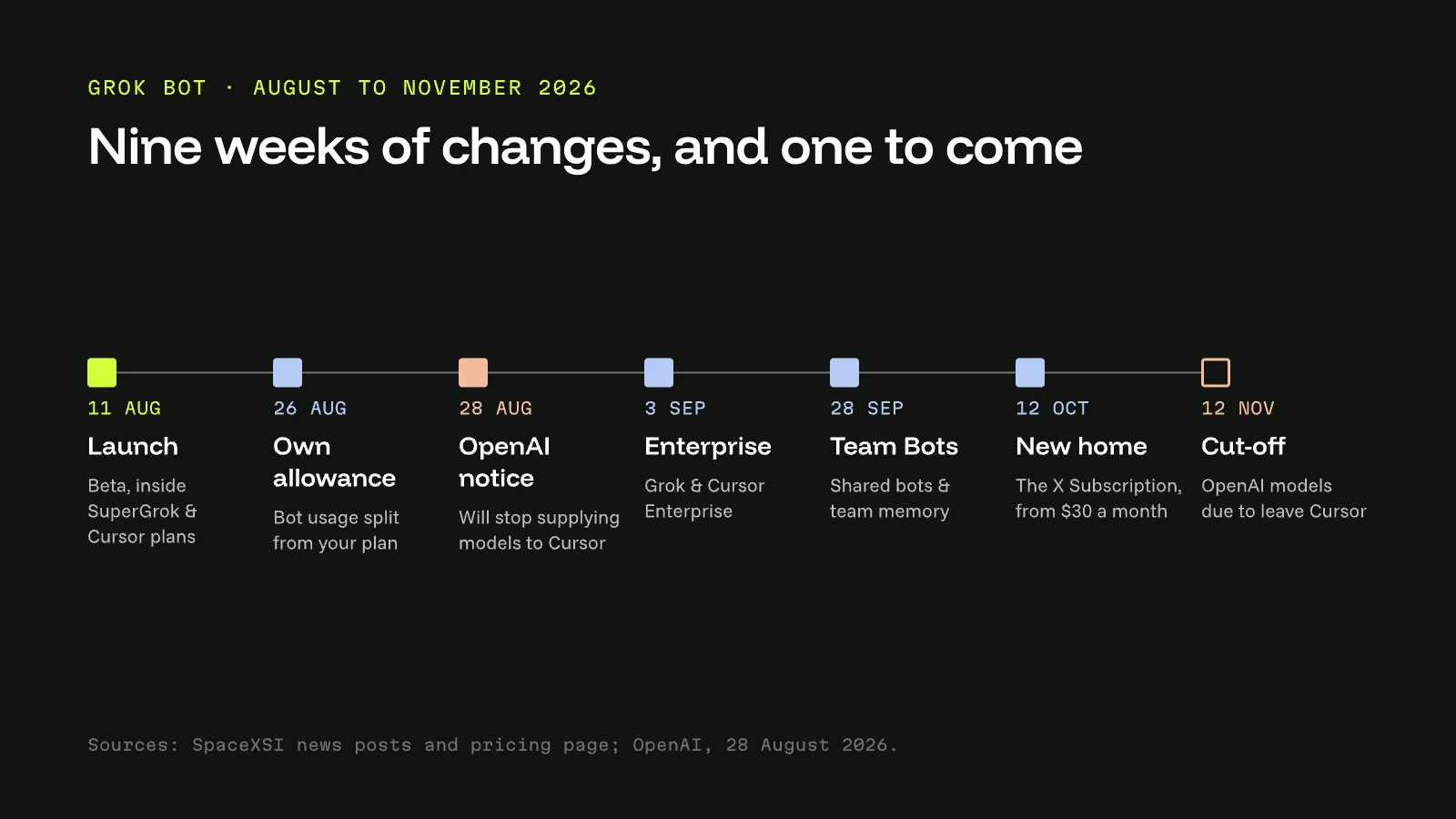
That’s a young product finding its feet, and I don’t blame them. But it’s a reminder of who decides. If your agency runs on it, a change to their plans is a change to your business, and a dispute between two AI companies becomes your problem. You find out with everyone else.
6. It doesn’t know your agency
Grok Bot connects to your tools one at a time: your inbox, your calendar, your Slack. It doesn’t know your clients, your deals, what was agreed on last month’s call or how you price a job. Team Bots, added in late September, let a team share a bot and a team memory, which helps. But routines still belong to whoever set them up, and what the bots learn lives inside their product.
I don’t need a complicated CRM. I need every agent, and everyone on the team, to see the same picture of each client.
What I won’t change is how I work
This is the heart of it.
AI models come and go. Tools come and go, as that chart shows. What shouldn’t change every quarter is how my agency works: how I take on a client, how I decide what to build, how I write, who signs off what.
The models are moving even faster than the tools. Menlo Ventures tracks what businesses spend on AI models. In 2023, OpenAI took half of it. Two years later, Anthropic was ahead.
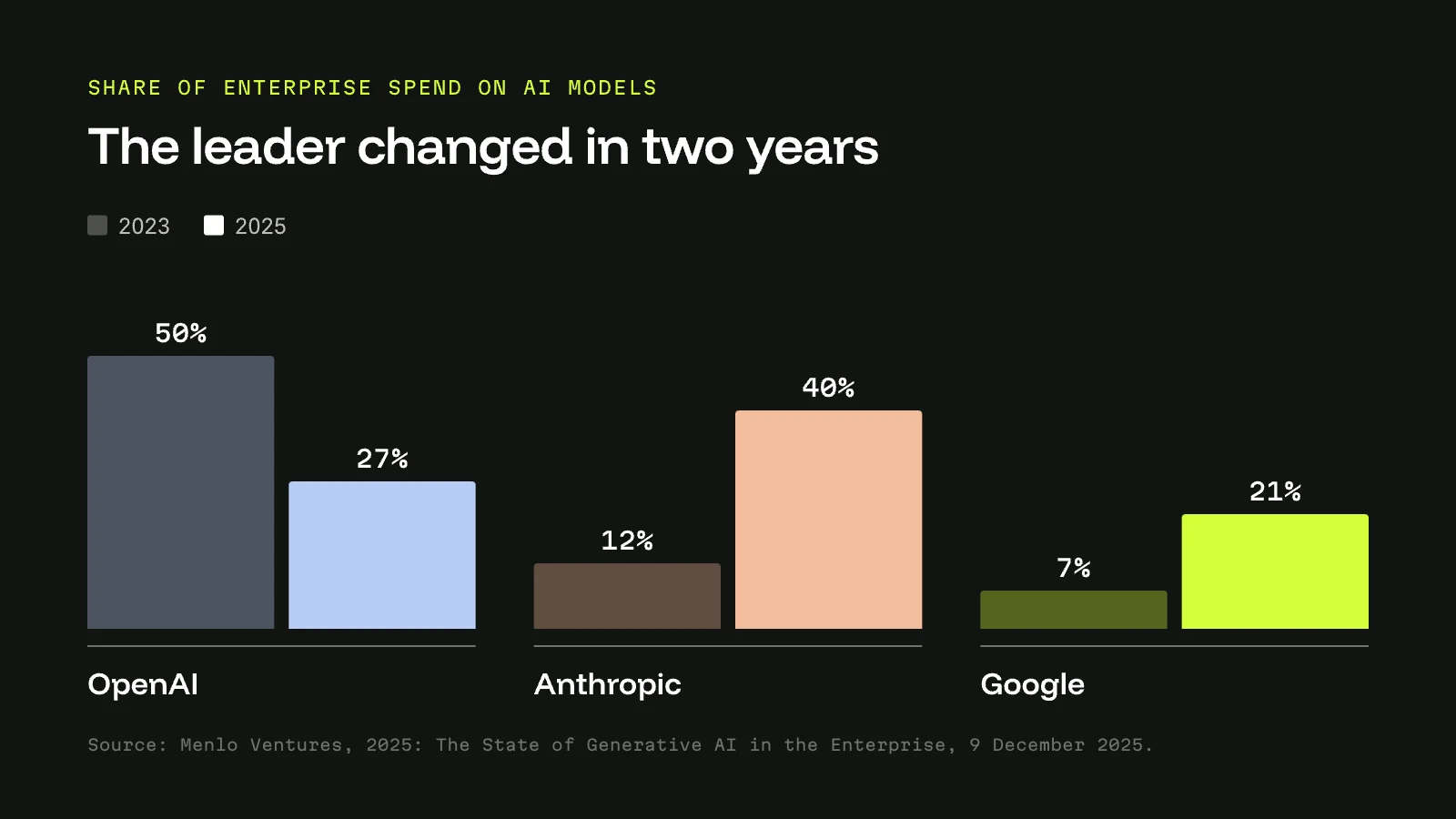
If you’d tied your business to the 2023 leader, you’d be on the wrong side of that today. Nobody knows who leads in 2028.
So I split the two. The way I work, my memory and my data are mine, and they stay put. The models are rented, and I swap them as better ones arrive. If a new Gemini model lands tomorrow and it’s better at a job, I switch that job over without anyone on the team changing how they work.
There’s a commercial point too. If your agency runs on the same subscription your client can buy for $30 a month, with the same defaults as everyone else, what are they paying you for? What makes an agency worth hiring is what it knows and how it works. Keep that yours.
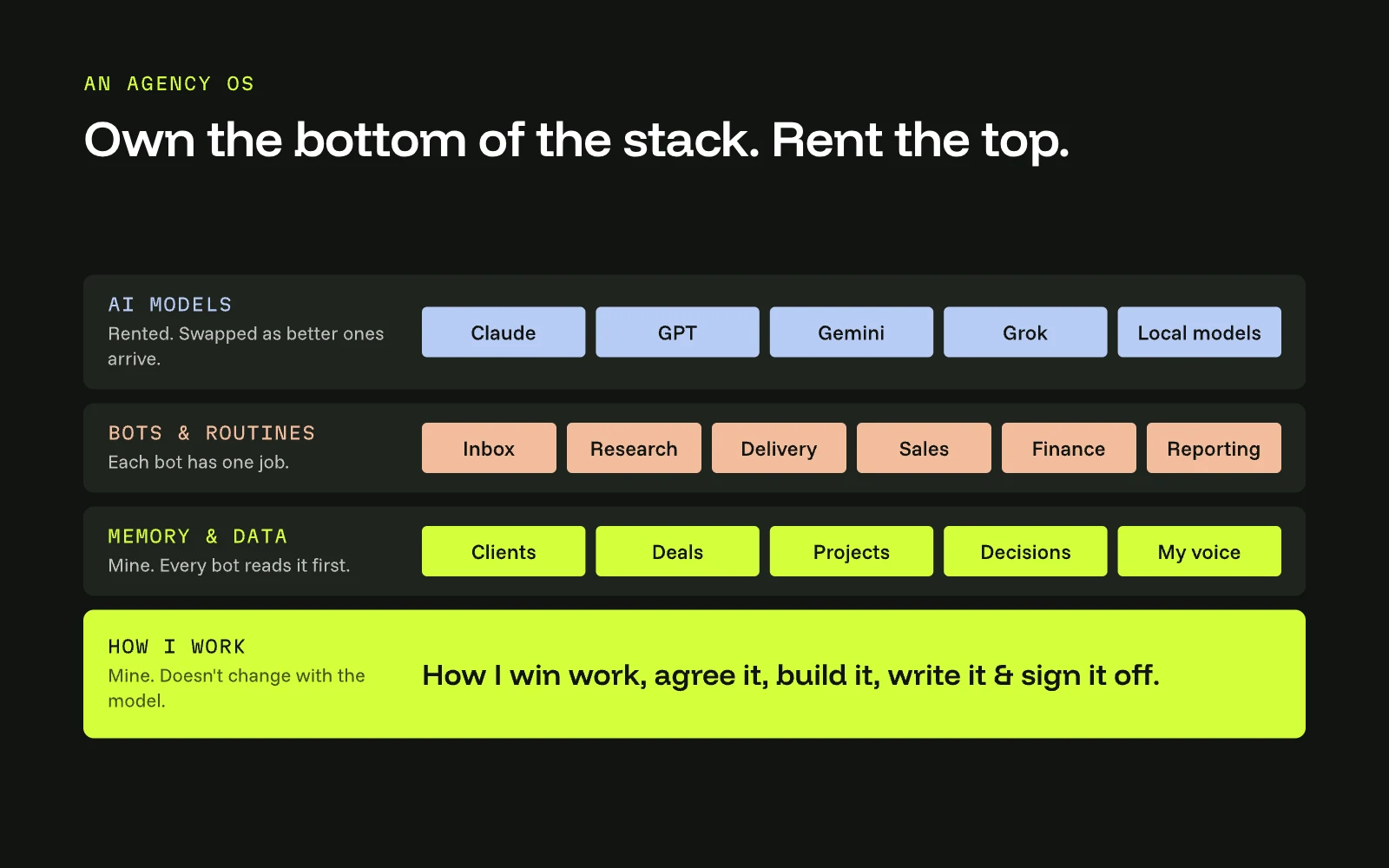
The models are rented. The way I work is mine.
I learned this the hard way. Earlier this year I had everything on one AI company, and when one of its models was switched off for 19 days, my platforms went with it. Never again.
No two agencies work the same way
I’ve worked with and inside agencies for over twenty years, and the one thing they have in common is that they all work differently.
That’s why one agency runs on Monday, the next on Asana and the next on ClickUp, and why most of them are a bit unhappy with whichever they chose. Off-the-shelf software gives you its way of working, and you bend to fit it.
That trade-off has changed. Building software used to need a development team and months of work. With coding agents and a good open-source base, it’s a fraction of that. You still need to plan it, test it, secure it and look after it, but an agency can now have its own system shaped to the way it already works, and change it when the way it works changes.
So the finance team can have a dashboard showing the numbers they care about, the way they want them. Delivery can see projects their way. Account leads can see their clients. The bots work from the same records. One brain, a view for every team.
That’s what I mean by an agency OS. Some people call the wider idea an agentic OS: agents with their own tools, memory and routines. An agency OS is that, built around one agency’s clients and way of working. Agency management software sells you its process. An agency OS runs yours.
What I built: a self-hosted Grok Bot alternative
I didn’t start from nothing. I built on Rakazo, an open-source AI agent and self-hosted Grok Bot alternative, released under the Apache 2.0 licence. It already does the parts Grok Bot does well: persistent bots with their own conversations, routines and history; computers they can use, with a browser, terminal and files; bots that hand work to each other; apps on desktop and phone.
My own agent app adds the things an agency needs on top of Rakazo:
- Any model, per bot. Claude, GPT, Gemini or a local model. Each bot can use the model that’s best for its job, and I change it in settings, not in a rebuild.
- My memory layer. Bots read what the agency already knows before they start, and suggest new facts as they work. I approve them before they become part of the record. I’ve written about how my memory layer works.
- My client and deal data. The bots see the same clients, contacts and pipeline I do, with clear rules on what they can touch. A bot can log a new enquiry or move an early lead along. Bigger deals wait for my sign-off.
- Its own login for every bot. Every read and every suggestion is recorded against the bot that made it, so I always know which bot did what.
- Hard walls between businesses. Each business is its own space. A bot working for one can’t see another’s clients.
- A daily team picture. Each bot can see what the others did today, so work builds on work instead of starting cold. That’s assembled from the records, with no AI call needed.
- It runs where I choose. A Mac mini in the office, the team’s own laptops or a server in the cloud. Same system, same bots.
Ansell AI’s own bots are moving onto it now, and it’s the set-up I bring into agencies when they want their own.
Grok Bot or your own agency OS?
| Grok Bot | Your own agency OS | |
|---|---|---|
| Set-up | Minutes. Download the app | Days to weeks, from an open-source base |
| AI model | No picker. Cursor manages the mix | You choose per bot: Claude, GPT, Gemini, local |
| Where it runs | Cursor-hosted computers in the US | Your machines, or the cloud and region you choose |
| Client data | On a US cloud, shared across your bots | Stored where you choose. Model providers still need assessing |
| Memory | Inside their product, per bot or per Team Bot | Your own memory layer, shared, with sign-off |
| Your agency’s data | Connect tools one by one | Built in: clients, deals, projects |
| Control | Approvals and Auto Review; more admin controls on Enterprise | Rules you set, per bot and per action |
| Price | Set by SpaceXSI | Hosting plus the models you choose |
| Best for | One person, quick automation | Agencies with client data and their own way of working |
Who this isn’t for
If you’re a one-person business and you want an assistant that handles your inbox and diary, use Grok Bot, or Dots, or Instinct. They’re good, they’re getting better, and you’ll be up and running today. Building your own would be a waste of your time.
Your own agency OS starts to make sense when three things are true:
- You handle client data that shouldn’t sit on someone else’s cloud.
- You want agents working inside your actual workflow, with your clients and your records.
- You’d rather not rebuild every time the market’s favourite AI company changes.
If that’s you, the answer isn’t to avoid tools like Grok Bot. Use them, learn from them and see what agents can do. Just don’t marry one.
How to start your own
You don’t need to build all of it on day one.
- Write down how you work. How a client comes in, how work gets agreed, who signs off what. This is the part no tool can give you, and it’s the part you’ll keep.
- Start your memory. One page per client, read by every agent before it starts. Here’s how to start a memory layer.
- Pick one job. One bot, one job, one routine. A morning brief, or new enquiries researched and drafted. Trust builds as you watch it work.
- Choose your base. An open-source agent you can host, so the bots, the data and the rules are yours.
- Choose models per job. Then keep choosing. That’s the point.
Where this fits
The agency OS is where everything I’ve written about comes together: the memory layer, coding agents that build to your standards and a champion who leads it.
If you’d like your own, shaped around how your agency already works, that’s what I help agencies build. See how I work, or send me a message and I’ll tell you where I’d start.